Enjoy 15% off select pet essentials

What Are the Causes of Feline Hip Dysplasia? (And What You Can Do About It)
Fampets Flex
5/22/20266 min read
What Are the Causes of Feline Hip Dysplasia? (And What You Can Do About It)
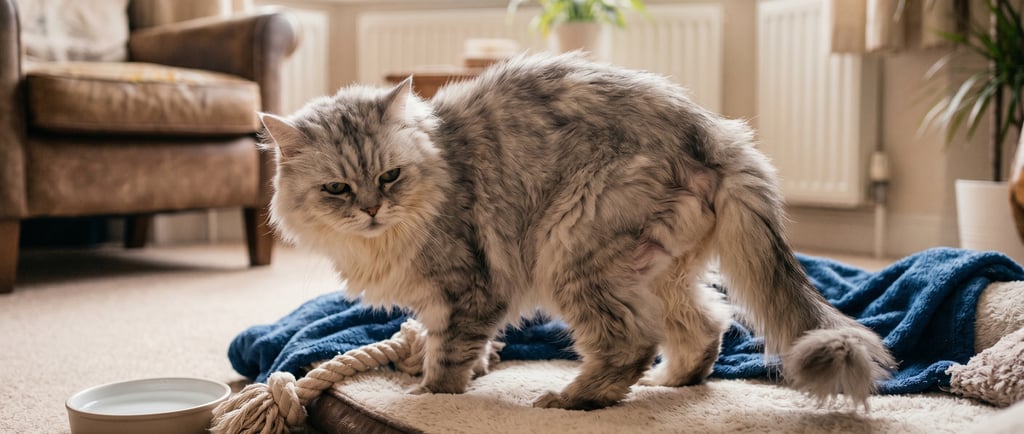
Most cat owners associate hip dysplasia with large dogs. Golden Retrievers, German Shepherds, Labradors. It feels like a dog problem. But feline hip dysplasia is far more common than most Malaysian cat owners realise, and because cats are masters at hiding pain, it often goes undiagnosed for months or even years while the joint damage quietly worsens.
If your cat is moving differently, jumping less, or just seems "slower" than they used to be, hip dysplasia may be the reason. Here's what's actually causing it, how to spot it early, and what's making a real difference for affected cats.
What Is Feline Hip Dysplasia?
Hip dysplasia is a developmental condition where the hip joint, which should be a smooth ball-and-socket joint, forms abnormally. Instead of the ball of the femur (thigh bone) fitting snugly and smoothly into the socket of the pelvis, the fit is loose, shallow, or misaligned.
This malformation causes three cascading problems:
Abnormal wear on the cartilage surfaces as the joint moves incorrectly
Chronic inflammation as the body attempts to stabilise an unstable joint
Progressive osteoarthritis as cartilage degrades and bone begins contacting bone
The result is a joint that hurts, stiffens, and gets progressively worse without intervention. Unlike some conditions that plateau, hip dysplasia is degenerative, meaning the longer it goes unmanaged, the more damage accumulates.
The Real Causes of Feline Hip Dysplasia
Understanding the cause matters because it helps you identify which cats are at risk and what you can do to slow the progression.
1. 🧬 Genetics, The Primary Driver
Hip dysplasia is fundamentally a genetic condition. Cats inherit a predisposition toward abnormal hip joint formation from their parents. Breeding lines with poor hip conformation pass the structural vulnerability to offspring, and it compounds across generations when screening isn't prioritised.
Breeds with significantly elevated risk in Malaysia:
BreedRisk LevelMaine CoonVery HighPersianHighHimalayanHighRagdollHighBritish ShorthairModerate-HighSiameseModerateDevon RexModerate
Maine Coons in particular have one of the highest rates of hip dysplasia of any cat breed globally, with studies suggesting prevalence rates of 18–25% in the breed population.
If your cat is one of these breeds, the question isn't really "will they develop joint issues?" but "when, and how severely?"
2. ⚖️ Obesity, The Accelerant
Excess body weight doesn't cause hip dysplasia on its own, but it dramatically accelerates the damage in cats that are genetically predisposed. Every extra kilogram a cat carries adds disproportionate load to already compromised hip joints, grinding down cartilage faster and intensifying inflammation.
Studies in cats show that overweight cats with hip dysplasia experience significantly more pain, faster joint deterioration, and earlier onset of severe symptoms compared to cats of healthy weight with the same underlying condition.
In Malaysia, where high-calorie indoor diets and limited exercise are common for house cats, obesity is one of the most controllable risk factors available to owners.
3. 🍽️ Nutritional Deficiencies During Growth
The period between birth and 12 months is when a cat's skeletal structure forms and solidifies. Inadequate nutrition during this window, particularly deficiencies in Calcium, Phosphorus, Vitamin D, and joint-supporting nutrients like Glucosamine precursors, can affect the quality of cartilage and joint formation.
Kittens fed nutritionally incomplete diets or weaned onto adult food too early are at elevated risk of developmental joint abnormalities. This is one reason why species-appropriate kitten nutrition isn't just about growth rate, it's about joint architecture that will either support or compromise the cat for life.
4. 🤸 Rapid Growth in Large Breeds
Large breed cats, particularly Maine Coons, that grow too rapidly put excessive mechanical stress on developing joint structures before they've had time to fully form and harden. The bones grow faster than the supporting cartilage, ligaments, and muscle can adapt to, creating instability in the hip joint during the critical developmental window.
This is one reason why portion control and growth-appropriate nutrition matters even more for large breed kittens than for smaller breeds.
5. 🤕 Previous Injury or Trauma
A significant hip injury, fracture, or dislocation earlier in life can alter the geometry of the hip joint permanently. Even after the original injury heals, the altered joint mechanics create abnormal wear patterns that progressively damage cartilage in the same way genetic dysplasia does.
Rescue cats with unknown histories are particularly worth monitoring, as past trauma may have created joint vulnerabilities that only become apparent years later as the cat ages.
6. 📉 Age-Related Cartilage Decline
Even cats without genetic dysplasia experience cartilage thinning as they age. For cats with underlying hip dysplasia, this natural decline compounds the existing structural problem significantly. A mildly dysplastic hip at age 3 may be a severely arthritic hip by age 10 if the cartilage deterioration isn't slowed through nutritional support.
This is why age is both a cause and an accelerant, not the root cause, but a factor that determines how quickly the underlying condition progresses.
How to Spot Hip Dysplasia in Your Cat
Cats compensate silently. They rarely limp the way dogs do. Watch for these behavioural and physical signals instead:
Early signs (easy to miss):
✅ Jumping onto lower surfaces than usual, preferring furniture they can step onto
✅ Slight hesitation before jumping up or down
✅ Stiffness after long periods of rest, especially in cold or air-conditioned rooms
✅ Subtle change in gait, slightly wider stance or "swaying" in the hindquarters
✅ Reduced grooming of the lower back, tail base, and hind legs (reaching hurts)
Later signs (more obvious):
✅ Clear reluctance or refusal to jump
✅ Visible muscle loss in the hindquarters as the body offloads weight
✅ Audible clicking or grinding from the hip area during movement
✅ Aggression or withdrawal when the hip area is touched
✅ Litter box avoidance if the box has high sides that require stepping over
If you're seeing three or more of these signs, a vet examination with hip X-rays is the right next step. X-rays will confirm the degree of joint malformation and any secondary arthritis development, giving you a clear baseline to manage from.
What Happens Without Treatment
Feline hip dysplasia is progressive. Without intervention:
Cartilage continues to degrade with every step
Bone-on-bone contact causes increasingly severe pain
Secondary osteoarthritis develops and spreads to adjacent joints
Muscle wastage accelerates as the cat moves less to avoid pain
Quality of life declines significantly, often before the owner fully realises what's happening
The good news is that with the right management approach, most cats with hip dysplasia maintain a genuinely good quality of life well into their senior years. Early intervention makes a dramatic difference.
Managing Feline Hip Dysplasia: The Complete Approach
🏥 Veterinary Diagnosis First
If you suspect hip dysplasia, a vet visit is the starting point. Physical examination and hip X-rays give you a confirmed diagnosis and severity assessment. For severe cases, surgical options including femoral head ostectomy (FHO) may be discussed. For mild to moderate cases, conservative management, nutrition, weight control, and joint supplementation, is typically the first-line approach.
⚖️ Weight Management
Non-negotiable. If your cat is overweight, reducing to a healthy body weight is the single highest-impact intervention available. Even a 10–15% reduction in body weight meaningfully reduces joint load and pain levels in dysplastic cats.
🏠 Environmental Modifications
Provide ramps or steps to furniture and favourite resting spots to eliminate the need to jump
Use a litter box with low sides or a cut-out entry to make access pain-free
Place food, water, and litter on the same level to minimise stair use
Provide a warm, soft, well-cushioned bed, cold worsens joint stiffness significantly
💊 Nutritional Joint Support, Where Fampets FLEX Comes In
This is where daily supplementation makes its most measurable impact. The three-ingredient joint support combination of Glucosamine, Chondroitin, and MSM is the gold standard in feline joint management for good reason:
Glucosamine HCl provides the raw material for cartilage synthesis and repair, slowing the degradation that drives dysplasia progression
Chondroitin Sulphate retains water within the cartilage matrix, keeping it thick, springy, and genuinely shock-absorbing rather than thin and brittle
MSM (Methylsulfonylmethane) is a natural anti-inflammatory compound that reduces the chronic joint inflammation that causes pain and accelerates cartilage breakdown
Together, they address both the structural side (cartilage maintenance) and the symptomatic side (inflammation and pain) simultaneously, which is why the combination consistently outperforms any single ingredient used alone.
Fampets FLEX Hip & Joint Support for Cats delivers all three in a tasteless, odourless powder that mixes invisibly into wet or dry food. For cats with hip dysplasia, it becomes a permanent daily supplement, because the underlying condition doesn't resolve, but its progression can be meaningfully slowed and its symptoms significantly managed.
Most cat owners using Fampets FLEX for hip dysplasia report:
📅 Week 1–2: Reduced stiffness after rest, slightly more willing to move
📅 Week 3–4: More comfortable jumping, increased activity and engagement
📅 Month 2+: Sustained improvement in mobility and visible quality of life
The earlier you start, the more cartilage there is left to protect.
Can Hip Dysplasia Be Prevented?
For genetically predisposed breeds, true prevention isn't possible. But you can significantly reduce the severity of the condition and delay its progression:
Feed growth-appropriate nutrition during the kitten phase, especially for large breeds
Maintain a healthy body weight throughout the cat's life
Start joint support early, ideally from 5–6 years for high-risk breeds, before symptoms appear
Choose breeders who screen for hip dysplasia if you're buying a pedigree cat, responsible breeders of Maine Coons and Persians should be able to provide OFA hip screening results for parent cats
The Bottom Line
Feline hip dysplasia is more common than most Malaysian cat owners realise, especially in popular breeds like Maine Coons, Persians, and Ragdolls. It's progressive, it's under-diagnosed because cats hide pain so effectively, and it's highly manageable when you catch it early and give the joints the nutritional support they need.
If your cat is showing any of the early signs described above, don't wait for the symptoms to become obvious. The window for the most effective intervention is now.
Fampets
Follow us here:
Contact
Any queries
fampetsmsia.os@gmail.com
017-9932899
© 2026. All rights reserved.