Enjoy 15% off select pet essentials

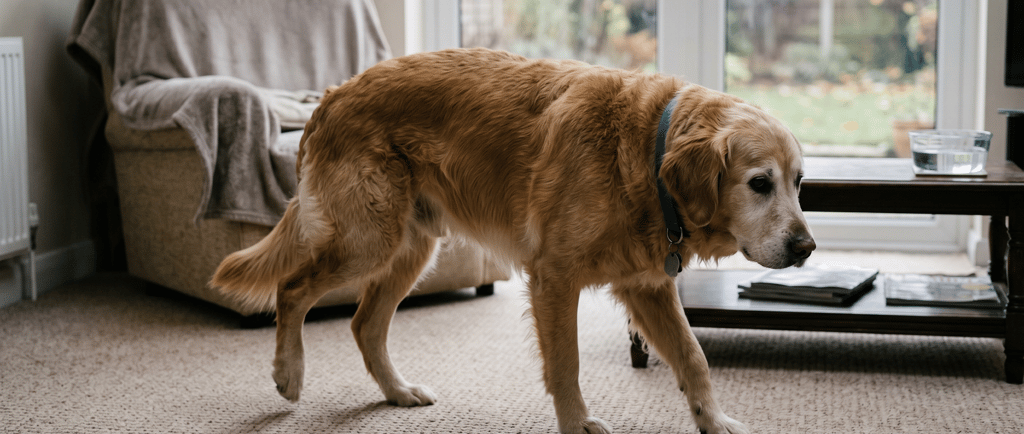
My Senior Dog Can't Get Up Properly, Is It Joint Pain?
Fampets Flex
5/22/20265 min read
My Senior Dog Can't Get Up Properly, Is It Joint Pain?
You noticed it gradually. Your dog takes a little longer to stand up after a nap. They hesitate at the bottom of the stairs. They're not as excited about walks as they used to be, and when they do walk, there's a subtle stiffness you can't quite ignore. You tell yourself it's just age. But somewhere in the back of your mind, you're worried it's something more.
It probably is joint pain. And the earlier you act on it, the better the outcome.
Here's what's actually happening in your dog's joints, how to spot it clearly, and what's making a real difference for senior dogs in Malaysia.
Understanding What Happens to Dog Joints With Age
A healthy joint works like a well-oiled hinge. The ends of the bones are cushioned by smooth cartilage, and the whole joint is lubricated by synovial fluid that keeps movement frictionless and painless.
As dogs age, two things happen simultaneously:
Cartilage breaks down faster than it regenerates. The cushioning thins, and bone starts moving closer to bone.
Synovial fluid production decreases. Less lubrication means more friction, more inflammation, and more pain with every step.
The result is osteoarthritis, the most common joint condition in senior dogs, affecting an estimated 1 in 5 adult dogs and the majority of dogs over 8 years old. It's progressive, meaning it gets worse over time without intervention. But it's also highly manageable when you catch it early and support the joints with the right nutrition.
Signs Your Dog Has Joint Pain, The Full Checklist
Dogs instinctively hide pain, it's a survival instinct inherited from their wild ancestors. By the time the signs are obvious, the joint damage is often already significant. Watch for these subtler signals:
Movement changes:
✅ Slow or stiff when getting up after sleep or rest
✅ Hesitates before jumping onto furniture, into the car, or up stairs
✅ Limping or favouring one leg, especially after exercise
✅ Shorter, slower walks, less enthusiasm for exercise they previously loved
✅ Bunny-hopping gait (using both back legs together instead of alternating)
Behavioural changes:
✅ Irritability or snapping when touched around the hips, back, or legs
✅ Sleeping more, less interest in play
✅ Licking or chewing at specific joints
✅ Muscle loss around the hindquarters (the body compensates by offloading weight)
If your dog shows 3 or more of these signs, joint pain is the most likely explanation. A vet visit to confirm with a physical examination is always worthwhile, but you don't need a diagnosis to start supporting their joints nutritionally.
Which Dogs Are Most at Risk?
Joint degeneration happens to all dogs eventually, but some are more vulnerable:
Risk FactorWhy It MattersLarge & giant breeds (Labs, Golden Retrievers, German Shepherds)More body weight stresses joints from a younger ageDogs over 7 years oldCartilage regeneration slows significantly after middle ageOverweight dogsEvery extra kilogram adds roughly 4x the load on jointsDogs with previous injuriesOld ligament tears or fractures accelerate local joint degenerationBreeds prone to hip dysplasiaBulldogs, Rottweilers, Great Danes, and Dachshunds are particularly at risk
What Most Owners Try First (And Why It Falls Short)
Pain medication (NSAIDs): Vets prescribe these for good reason, they provide real relief. But they treat the pain, not the underlying cartilage breakdown. Long-term NSAID use also carries risks for kidney and liver health in older dogs. They work best as part of a broader management plan, not as a standalone solution.
Rest: Counterintuitively, complete rest makes joint pain worse over time. Gentle, regular movement keeps synovial fluid circulating and prevents the muscle wastage that puts even more strain on joints. Short, frequent walks are far better than long rests followed by bursts of activity.
Ignoring it: The most common approach, and the most costly. Osteoarthritis is progressive. Every month without intervention is a month of continued cartilage loss that can't be reversed.
What Actually Works: Rebuilding From the Inside
The gold standard for managing canine joint pain combines three things:
Glucosamine to stimulate cartilage repair and slow further breakdown
Chondroitin to retain water in the cartilage, keeping it thick, springy, and cushioning
MSM (Methylsulfonylmethane) to reduce joint inflammation and pain at the cellular level
These three ingredients work synergistically. Glucosamine and Chondroitin without MSM address the structure but not the inflammation. MSM without Glucosamine and Chondroitin manages the pain but doesn't rebuild anything. Together, they form the complete joint support stack that vets around the world recommend as the first line of nutritional intervention.
This is exactly what Fampets FLEX Hip & Joint Supplement for Dogs delivers, vet-formulated with Glucosamine, Chondroitin, MSM, and Omega-3 fatty acids in a tasteless powder that mixes directly into food.
Here's what a Malaysian dog owner experienced:
"My dog was barely walking and seemed in a lot of discomfort. After starting Fampets FLEX, I've seen a huge improvement in his movement. He's much more active now and doesn't seem to be struggling like before. Really happy with the results and will definitely be restocking."
, Lisa T ⭐⭐⭐⭐⭐
The 30-Day FLEX Timeline: What to Expect
Joint supplements work gradually, because cartilage repair is a biological process that takes time. Here's what most owners experience:
📅 Days 1–7: Reduced stiffness after rest, easier time getting up
📅 Days 8–21: Noticeably more willing to walk, attempt stairs, and engage in gentle play
📅 Day 30+: Sustained mobility improvement, more energy, more like their old self
Consistency matters more than anything. The dogs that see the biggest transformation are the ones whose owners commit to daily supplementation for at least 30 days before evaluating results.
Supporting Habits That Accelerate Recovery
While Fampets FLEX does the heavy lifting nutritionally, these lifestyle adjustments compound the results:
Maintain a healthy weight. Every kilogram lost reduces joint load significantly. If your senior dog is overweight, speak to your vet about a gradual weight management plan.
Keep walks short and frequent rather than long and infrequent. 3 x 15-minute walks beats 1 x 45-minute walk for arthritic dogs.
Consider a soft, supportive bed. Orthopaedic foam beds reduce pressure on joints during the long hours your senior dog spends resting.
Warm up before exercise. A slow 2-minute walk before any activity loosens the joints and reduces injury risk.
Should You Start Before Symptoms Appear?
Yes, and this is the advice most owners wish they'd received earlier. Large breeds and breeds genetically prone to hip dysplasia benefit significantly from starting joint support at 5–6 years old, before any visible symptoms appear. Cartilage is much easier to maintain than it is to rebuild once it's gone.
If your dog is already showing signs, start now. The earlier, the better, but it's never too late to slow the progression and meaningfully improve their quality of life.
The Bottom Line
If your senior dog is struggling to get up, moving stiffly, or just not themselves, joint pain is the most likely cause, and it's highly manageable. Don't wait for it to get worse.
The right nutritional support, started consistently, can give your dog back the mobility and enthusiasm they've been missing. For thousands of Malaysian dog owners, Fampets FLEX has been that turning point.
Fampets
Follow us here:
Contact
Any queries
fampetsmsia.os@gmail.com
017-9932899
© 2026. All rights reserved.